
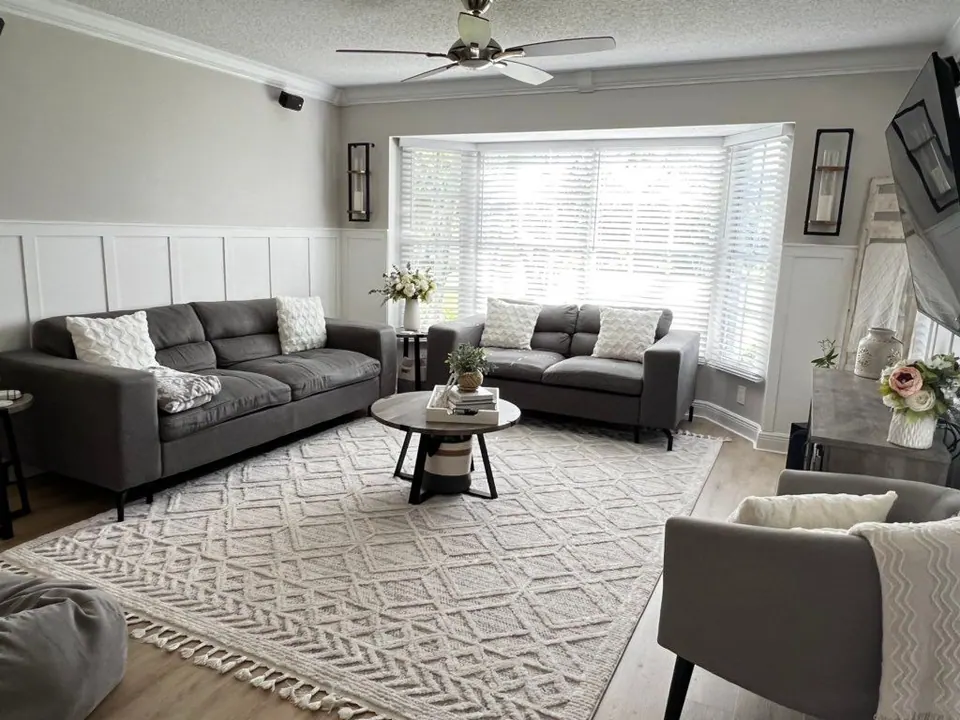
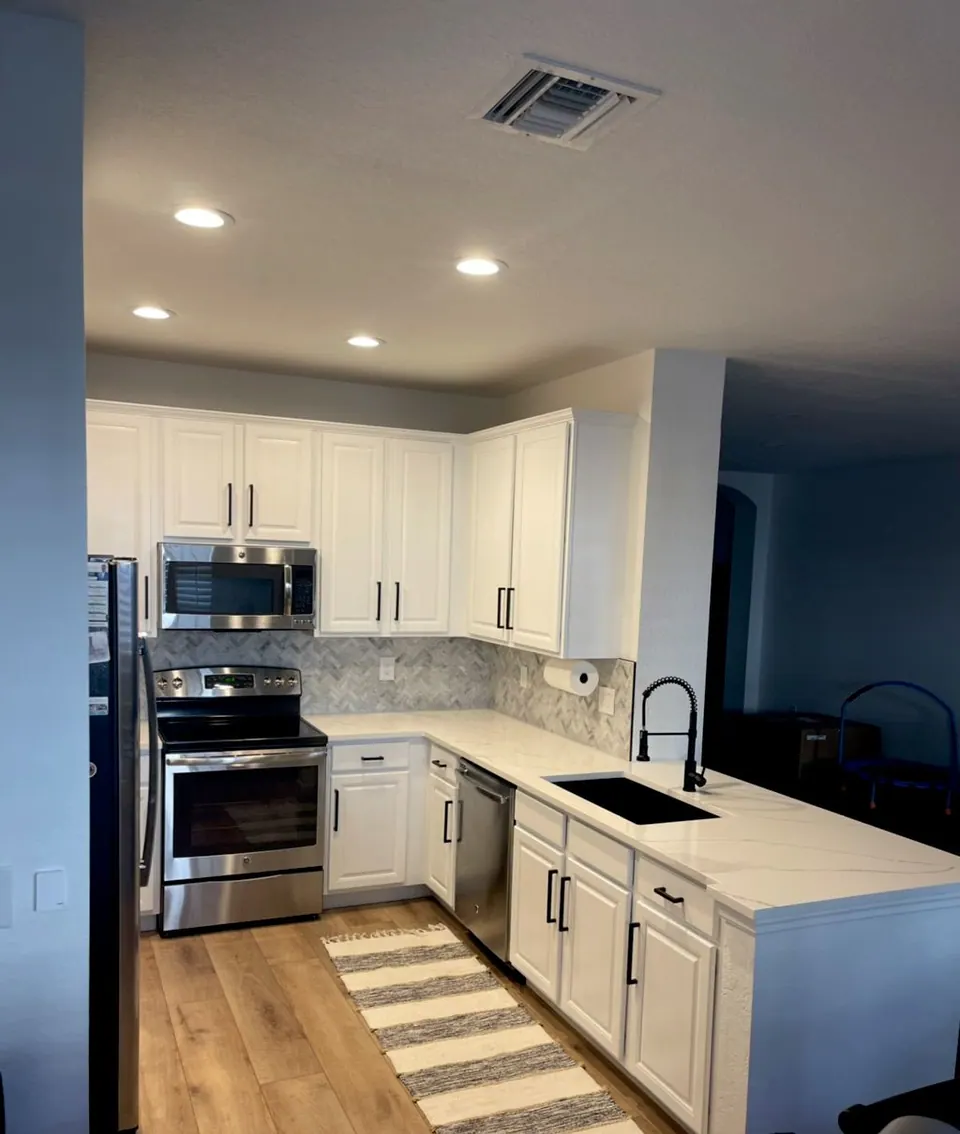
Luxury vinyl plank, often called LVP, is the floor most South Florida homeowners ask us about. It handles humidity and spills well, it is comfortable underfoot, and good quality plank reads convincingly as wood from standing height.
How we install it
- Assess the existing floor. Vinyl plank shows what is under it. We check the slab or the existing floor for flatness, hollow spots and loose pieces, and we tell you plainly whether it can stay or should come out.
- Prepare the surface. Deep grout lines get skim coated. High spots are ground and low spots are filled to the tolerance in the manufacturer's installation guide.
- Plan the layout. We set the starting line so the planks run with the longest sight line of the room and no row finishes with a sliver at a doorway.
- Install and trim out. Expansion space is left at the perimeter as the manufacturer requires, then covered with new baseboard or quarter round. Thresholds at sliders and transitions to other floors are fitted cleanly.
Over existing floors
Many of our vinyl jobs go straight over an existing hard floor. That is faster and quieter than demolition, and it is often the right call. It is not the right call when the existing floor is cracked, hollow or out of flat, or when the added height would interfere with doors and appliances. When removal makes more sense, we remove the old floor and prepare the slab before installing.
Stairs
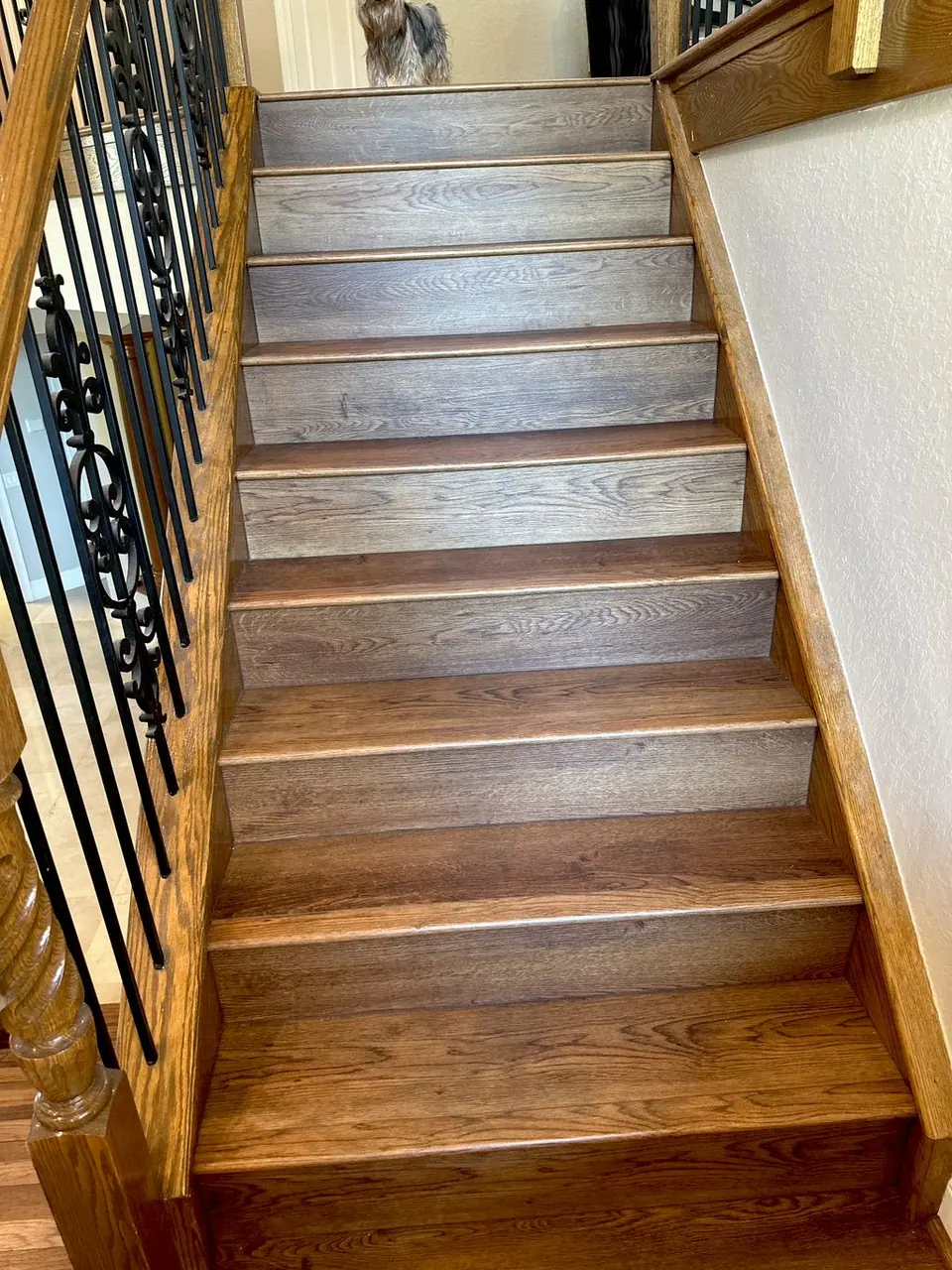
Vinyl plank on stairs is detailed work: every tread and riser is cut and fitted, and the nosings have to be secure. Many of the stair photographs in our gallery are vinyl plank.
In condominiums
Most associations in Palm Beach and Broward require an approved sound underlayment under hard surface floors on upper levels. Read our condominium flooring guide before you choose a product, and bring your association's rules to the estimate.